Dr Francisco J. Abellán
Glaucoma ophthalmologist in Madrid
Optic-nerve, visual-field and pressure assessment to plan individual monitoring or treatment.
Ophthalmologist · Medical registration no. 282880215
Trained at Hospital Universitario de La Princesa
- 1Intraocular pressure
- 2Optic-nerve OCT
- 3Visual field
The practice secretary manages administrative information and private appointments.
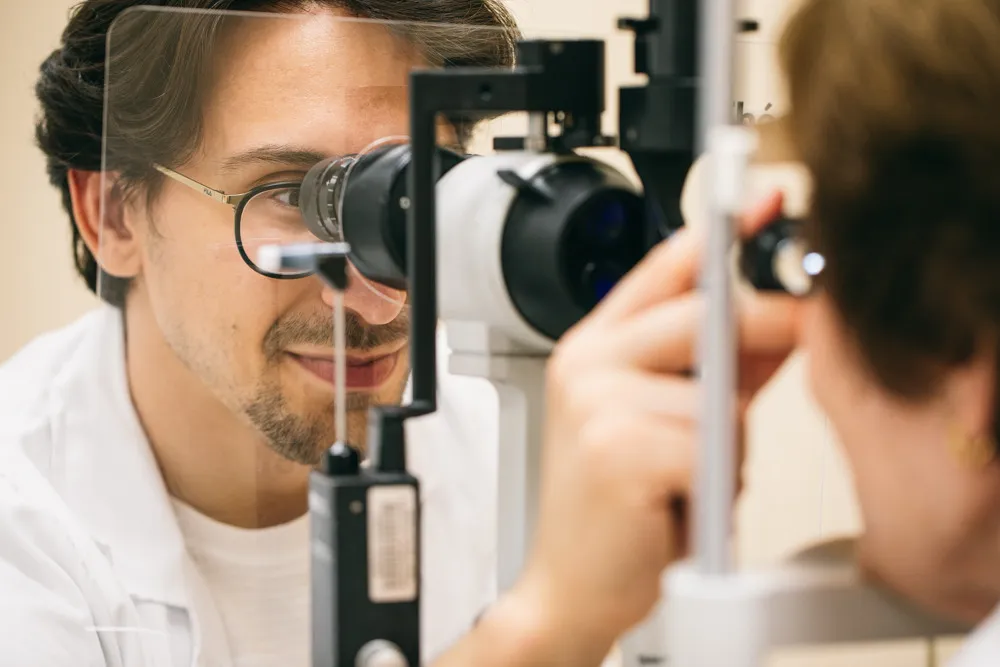
When an assessment may be helpful
Pressure is only one part of the assessment.
High eye pressure or a suspicious optic nerve.
Established glaucoma: review of control.
Change on OCT or visual-field testing.
Laser, surgery or second-opinion assessment.
How glaucoma is assessed
Tests are interpreted together and compared over time.
Intraocular pressure
One measurement, interpreted with the full examination.
Optic-nerve OCT
Measures nerve fibres and helps compare change.
Visual field
Assesses visual function and its course.
Gonioscopy and pachymetry
Assess angle anatomy and corneal thickness.
Clinical examination
Relates test results to the eye’s actual anatomy.
Target pressure
Adapted to risk and the course of each eye.
Damage can progress without early symptoms
Visual-field testing helps detect and monitor loss that may not be noticed.
Different ways to lower eye pressure
There is no universal sequence. Choice follows glaucoma type, risk and target pressure.
Monitor
Lower-risk profiles may only need tailored follow-up.
- and/or
Eye drops
Selected for efficacy, tolerance and ease of use.
SLT laser
May be used initially or added later in selected cases.
Surgery
Technique follows the eye and the pressure reduction required.
From lower to higher intervention. The starting point and combinations depend on each eye.
Glaucoma in 3D
An interactive explanation of drainage, optic-nerve damage and treatment options.
Frequently asked questions about glaucoma
Does high eye pressure mean I have glaucoma?
No. High pressure increases risk, but diagnosis requires assessment of the optic nerve, visual function, angle and change over time. Glaucoma can also occur at statistically normal pressures.
Does glaucoma always cause symptoms?
Chronic glaucoma usually causes no early symptoms. This is why testing and follow-up matter. Severe pain, a red eye, halos and sudden visual loss require urgent assessment.
Can SLT laser be the first treatment?
Yes, it may be offered initially to selected people with ocular hypertension or non-advanced open-angle glaucoma. It can also be used later. Angle anatomy, glaucoma type and target pressure determine suitability.
Does glaucoma surgery cure the disease?
It does not restore previous damage or remove the need for follow-up. Its aim is to lower pressure and reduce progression risk; drops or further treatment may still be needed.
Authorship, medical review and sources
- Author and medical reviewer
- Dr. Francisco Javier Abellán Martínez
- Ophthalmologist · Medical registration no. 282880215
- The same specialist currently authors and medically reviews the content; this is not presented as an independent external review.
- Last medically reviewed
Sources consulted (3)
- Terminology and Guidelines for Glaucoma, 6th edition (Opens in a new tab)European Glaucoma Society
- Glaucoma: diagnosis and management (NG81) (Opens in a new tab)National Institute for Health and Care Excellence (NICE)
- Patient information booklets (Opens in a new tab)The Royal College of Ophthalmologists
General educational content. It does not replace an individual assessment, diagnosis or personalised instructions from your healthcare team.
How these guides are written and reviewedGlaucoma assessment in Madrid
Private consultation at Centro de Especialidades Clara del Rey, Hospital Quirónsalud San José. The practice secretary manages availability and administrative information.
WhatsApp and phone are administrative channels. They do not replace a consultation, cannot manage emergencies and should not be used to send sensitive clinical information.